
Before You Ride a Street Kart in Tokyo: How to Fit Your Driver's License and Document Checks Into Your Plans
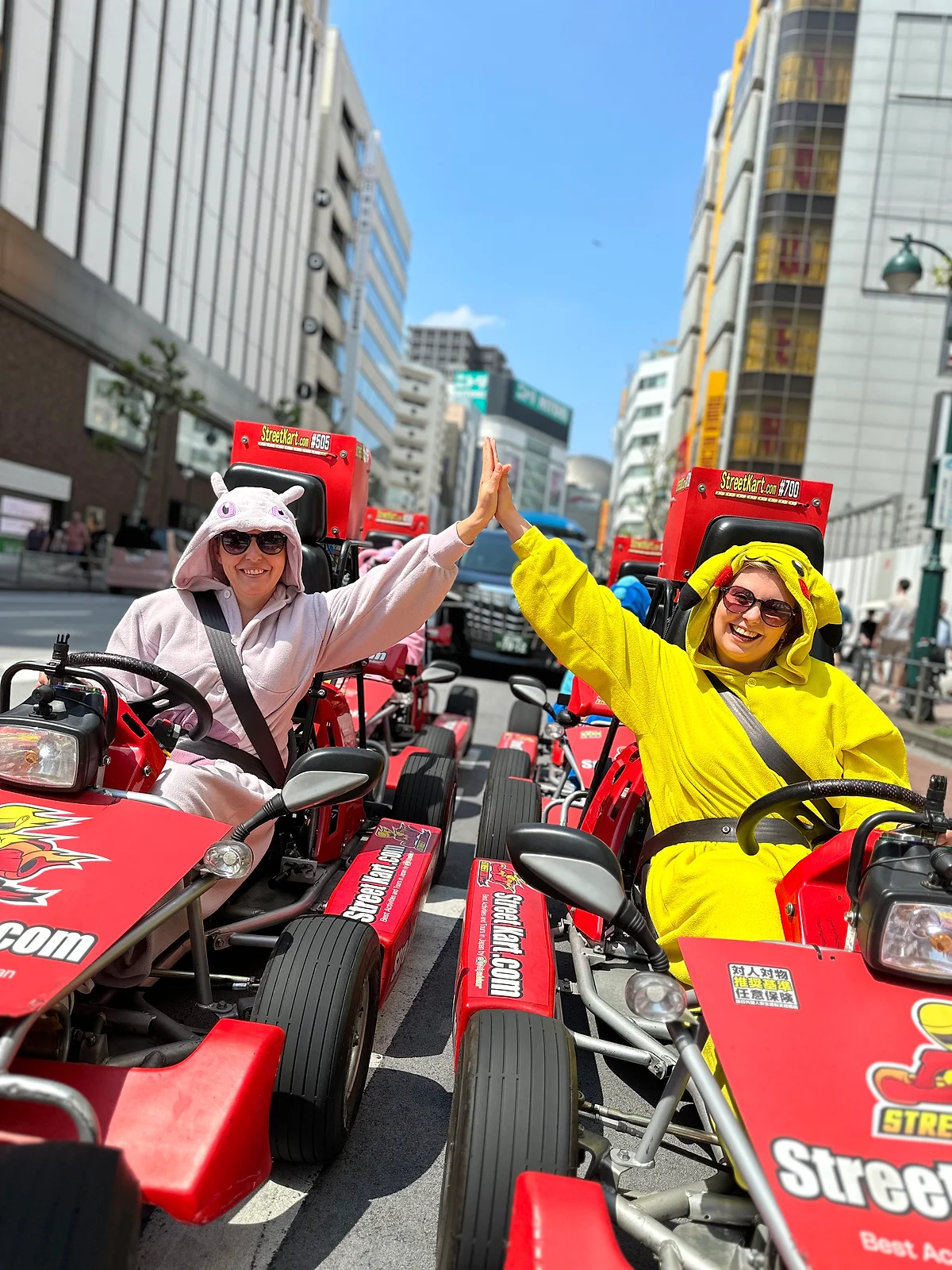
Before You Ride a Street Kart in Tokyo: How to Fit Your Driver's License and Document Checks Into Your Plans
It's a morning in Tokyo. You wander around Ueno Park, polish off lunch, and head straight to a Street Kart shop in Akihabara. Up to this point, the plan is perfect.
Then you open your bag in front of the shop and freeze. Your driver's license documents aren't there. They're in the hotel safe.
That might sound funny, but honestly, it can happen to anyone. It's even more likely when you're caught up in the excitement of a trip.
If you're adding a street kart tour to your itinerary, the most important thing to prepare is deciding in advance where in your schedule you'll check your documents. This article looks at how to fit license checks around your other plans when you're traveling in Tokyo with a group of different ages and energy levels, and then goes through each shop location one by one. Let's put the plan together.
Why Should You Treat "Checking Your Documents" as Part of Your Travel Plans?
The license requirements and documents you need to drive a street kart depend on the country or region. What you need, and in what form, also depends on your own situation. So this article won't list documents one by one. If we named only some of them, readers might take that to mean "that's all I need."
The correct list of required documents is on the driver's license page of the Street Kart official website. Please check the official website for details.
What this article is about is when in your trip to do that check.
Some people carry their license in their pocket every day without a second thought. When they travel, though, they tend to tuck license documents away in the hotel safe or deep in a suitcase "because they're important." The more carefully you put them away, the easier it is to forget them on the day. That's the trap!
When you're traveling as a group, the risk goes up. Everyone assumes "someone else has it." If three people are driving, that's three people's documents to check. And if an earlier plan runs late and you have to hurry to the shop, there may be no time left to check at all.
That's why we recommend checking three separate times: before you leave home, after you arrive in Tokyo, and on the morning of the tour. If you try to do it all in one go, something will slip through.
Check Three Times: Before Departure, After Arriving in Tokyo, and on the Morning of the Tour
Do the first check before your trip, while you're still at home. The key is that everyone who plans to drive opens the official page and reads it themselves, rather than one person reading it on behalf of the group.
The reason is simple. People's licenses are issued by different countries, and they hold different types of documents. Even within the same group, what applies to one person may not apply to another. If the group leader decides "we're fine," other people's cases can get missed.
The official website is available in 22 languages. Open it first and see whether it's in a language you can read. By the way, the Chinese word for "check" is 确认/確認, written with almost the same characters as the Japanese word. That's a small, nice coincidence for friends who read Chinese characters.
Check the age and participation requirements on the official website at this stage too. The wider the age range in your group, the more it helps to decide "who drives and who doesn't" before you leave. Your plans in Tokyo will be much easier to put together. If anyone's situation is unclear, don't guess. Ask through the booking contact channels (introduced later) for peace of mind.
Do the second check on the night you check in to your hotel in Tokyo. There's just one task: each driver puts their own documents in one spot inside the bag they'll carry on tour day.
We recommend that each driver bring a clear zip-top bag and keep their documents in it. You can see what's inside, so there's no need to open it and dig around asking "It's in there, right?" If you bring the bags from home, you won't have to hunt for them once you're there.
At this point, pick one person to do the check on the morning of the tour. This person doesn't hold anyone's documents. Their only job is to check everyone's bags before the group leaves the hotel.
Another important thing: find out whether anyone will be doing something on their own the day before the tour. For example, some of the group might move to a different hotel the night before, or people might split up to shop for souvenirs. If a driver will be away from the group, decide on the night you arrive how the morning check will work. That way you won't have to worry about it later.
Do the third check on the morning of the tour, before you leave the hotel. Don't leave it until you reach the shop. If you find at the shop that your documents are missing, you may not have time to go back to the hotel for them.
Take extra care on days when you're sightseeing before the tour. If you plan to visit another area in the morning and then head to the shop, you'll be even farther from your hotel.
So do it in the morning. Before you put your hand on the doorknob, stop for a moment. Each driver unzips their bag and sees, with their own eyes, that their documents are in the clear bag. The group's checker can even count everyone's bags on their fingers. It takes 10 seconds, and those 10 seconds protect your whole day.
How to Combine the Tour With Your Earlier Plans: A Look at Each Tokyo Shop
Street Kart has 9 shops across Japan (7 in Tokyo, 1 in Osaka, 1 in Okinawa). However, of the 7 Tokyo shops, Akihabara No.1 and No.2 are in almost the same place, and so are Shibuya and Shibuya Annex. In other words, the shops aren't spread over 7 different areas of Tokyo. The easiest way to choose a shop is to start with the area where you want to plan things before and after the tour.
None of the shops have parking, so plan to get there by public transportation. Even on days when you'll be getting around by car, plan to take the train to the shop.
Akihabara
The Akihabara shops are easy to combine with sightseeing nearby. According to the shop information, Kanda Myojin Shrine is a 10-minute walk from the shop, and Ueno Park is 5 minutes by train. Personally, I find it easy to plan a day where you visit the zoo or museums in Ueno Park in the morning and then move on to Akihabara.
But Ueno Park is big! The more you walk, the more likely it is that friends with less stamina will get tired in the afternoon. The trick is not to pack too much into Ueno, and to leave early enough based on the tour meeting time. There's also a Starbucks in front of Akihabara Station (a 2-minute walk from the shop), so arriving a little early and taking a break there is a good option.
Back to documents for a moment. The Ueno-to-Akihabara plan is a typical case where you never go back to the hotel between leaving in the morning and arriving at the shop. This is the kind of day when those 10 seconds in the morning matter most.
After the tour, you can walk to Tokyo Station (20 minutes on foot, 5 minutes by train) to see the red-brick Marunouchi Station Building. It opened in 1914, and restoration work was completed in 2012. In the evening light, the red of the brick gets much deeper. Hold your phone vertically and place the central dome around the top third of the frame. It also fits nicely in a Reels video.
Shibuya
The two Shibuya shops are a 10-minute walk from Shibuya Station and a 5-minute walk from Shinsen Station on the Keio Inokashira Line. Shibuya Scramble Crossing and the Hachiko statue are also a 10-minute walk from the shop.
When planning something in Shibuya before the tour, watch out for the crowds. Huge numbers of people cross Scramble Crossing at once. When you're moving as a group, you can get separated from your friends while taking photos. And if a driver gets separated, their documents go with them! On days when Shibuya comes before the tour, always keep in the back of your mind where your drivers are.
Another option is to go up to the observation deck at Shibuya Scramble Square (a 10-minute walk) after the tour and look down on the city. On the tour, you see the city from close to street level, and afterward you look down on the same city from high above. A day where your viewpoint flips from low to high gives you a wide range of photos side by side, which I think works well for posts that show several images together.
Shinagawa
The Shinagawa shop is a 3-minute walk from Kitashinagawa Station on the Keikyu Main Line and a 10-minute walk from Shinagawa Station. Shinagawa Shrine is only a 5-minute walk from the shop, which makes it a good stop before the tour.
Shinagawa Shrine has a stone staircase and a Fujizuka, a small mound built to represent Mount Fuji. The stairs may be hard for friends with weak legs or knees. In that case, just split into a group that climbs and a group that waits at the bottom. If the climbers come straight back to where the others are waiting, everyone's documents will be together when you head to the shop.
After the tour, you can walk to canal-side Tennozu Isle (20 minutes on foot) to visit cafés and art galleries. If some of your friends find walking hard, don't push it. It's easier to spend time around Shinagawa Station, for example at atre Shinagawa or other facilities connected directly to the station.
Tokyo Bay
The Tokyo Bay shop is an 8-minute walk from Shin-Kiba Station, which is served by the JR Keiyo Line, the Tokyo Metro Yurakucho Line, and the Rinkai Line.
Odaiba and Toyosu Market are 10 minutes away by car, and Kasai Rinkai Park is 15 minutes by car. Keep in mind that even though these are "nearby," none of them are within walking distance. If you plan to visit Odaiba or Kasai Rinkai Park before the tour, look up the night before how you'll get back to Shin-Kiba Station by train. If you plan on the trip taking a while, you won't have to rush to make the meeting time.
This is a seaside area, so depending on the season, the sun or wind may feel strong. If your group has a range of energy levels, choose indoor places for your plans before the tour (such as DiverCity Tokyo Plaza or Aqua City Odaiba) so no one gets tired out before the tour.
How Should You Plan a Day When Some of Your Group Won't Drive?
On trips with a range of ages and energy levels, not everyone will necessarily join the tour. Some people won't meet the participation requirements, and others who do may decide to sit this one out. Check the participation requirements on the official website, and then decide in advance what the drivers and the non-drivers will each do. The day will go much more smoothly.
The key is to make the non-drivers' plans something near the shop that ends when the tour does. Decide ahead of time on an easy place to meet up after the tour.
In Akihabara, non-drivers could wait at a café within walking distance of the shop or at Kanda Myojin Shrine (a 10-minute walk). In Shibuya, it's a good idea to meet at a place where people can sit and wait, like Blue Bottle Coffee Shibuya (a 10-minute walk) or Starbucks Shibuya Tsutaya (an 8-minute walk). In Shinagawa, choose one of the facilities connected directly to Shinagawa Station, and at Tokyo Bay, choose a place near the station like CASICA (at Shin-Kiba Station). That way, the trip after you meet up will be short too.
Once you've decided on a meeting place, drop pins on both the shop and the meeting place in your phone's map app and share them in your group chat. If you post the map links in a LINE or WhatsApp group, friends who aren't used to Japanese place names written in English are less likely to get lost. Many Japanese place names are written in kanji, so for friends who read Chinese characters, also sending the names in kanji, such as 神田明神 (Kanda Myojin) and 品川神社 (Shinagawa Shrine), makes it easy to compare them with station signs.
One more thing: it's better not to make a non-driver the person who holds the documents. The documents belong to the drivers, so head to the shop with the documents in each driver's own hands.
What Makes Street Kart Great: What's Waiting Once Your Documents Are Ready
So far, this article has been all about preparation. But the experience is worth all that planning! Let's look at what's waiting for you once your documents are ready.
First, Street Kart tours are led by trained guides. You don't drive wherever you like. Instead, you follow the guide along a set route for each shop.
Second, language. On tour day, guidance is given mainly in English. Guidance in Japanese or other languages depends on the staff that day and can't be guaranteed. If you have any concerns, ask through the booking contact channels in advance.
Third, the views of Tokyo along the route. The Tokyo Bay shop's routes include the 798m-long Rainbow Bridge and the 333m-tall Tokyo Tower. The Akihabara shops' routes include the Marunouchi Station Building at Tokyo Station, the streets of Ginza, and Akihabara Electric Town. The Shibuya shops' routes include Shibuya Scramble Crossing and the zelkova trees lining Omotesando. You get to see places you knew from guidebooks from a different angle during the tour. That's what makes it so much fun.
Fourth, the feeling of the ride itself. Take a moment and imagine it. The light turns green. The guide's kart in front of you starts moving. You press the accelerator too. The sounds of the city and the wind hit you directly, not through a window. It's the same Tokyo you watched from bus and train windows, but it feels completely different up close. At least, that's how it feels to me.
Fifth, the track record. As of November 2023, across all shops, Street Kart reports more than 150,000 tours, more than 1.34 million customers, an average rating of 4.9 out of 5.0, and more than 20,000 reviews. All of these figures are from November 2023, so please note they aren't current.
Sixth, you can choose your area within Tokyo: Akihabara, Shibuya, Shinagawa, or Tokyo Bay. You can pick a shop to suit your plans before and after the tour, so it fits into your itinerary, like "this day we'll combine it with Ueno" or "this day we'll spend in the bay area."
Finally, you can use the official website in many languages right from the planning stage. It's available in 22 languages. Everyone can start the "one person at a time" check this article keeps coming back to on their own screen.
For photos and videos, including how to take them, follow your guide's instructions on the day. My personal tip is to take your time with photos before and after the tour. One shot in front of the shop with the parked karts, and one with your friends after you've met up again. Since you have time to plan the shot, those photos tend to come out well.
What to Check Before Booking, and in What Order
You can book through Facebook, LINE, or email (booking@streetkart.com). If you're not sure about license documents or participation requirements in your own case, ask through these channels when you book. That way you can go into the day feeling calm.
Weekends tend to fill up, so if you want a weekend tour, we recommend booking early. Once you've set the tour day in your itinerary, plan the rest in this order: what you'll do before and after the tour, where your hotel is, and what the non-drivers will do. Once that's done, the times to check your documents will fall into place.
For details, please check the official website (kart.st).
Now, one last time.
Before you leave home, each person reads the official page. On the night you arrive in Tokyo, each person puts their own documents in one place. On the morning of the tour, before leaving the hotel, open your bag.
That's just three checks. Write them into your itinerary. Then whether you're in Ueno, Shinagawa, or Odaiba, you can enjoy your earlier plans to the fullest and walk through the shop door with confidence. Documents ready, friends ready. All that's left is to hit the road!
This article was originally written in Japanese and translated using AI. Some expressions may read unnaturally, and we appreciate your understanding. For the most accurate and up-to-date information, please refer to the official site at kart.st.
Street Kart is not affiliated with Nintendo or the Mario Kart series in any way. We do not provide costumes of Nintendo characters, and such costumes may not be worn during tours even if brought by participants.