
Before You Ride a Street Kart in Autumn-Leaf Tokyo: 7 Pitfalls to Avoid When Traveling with Companions of Different Ages and Fitness Levels
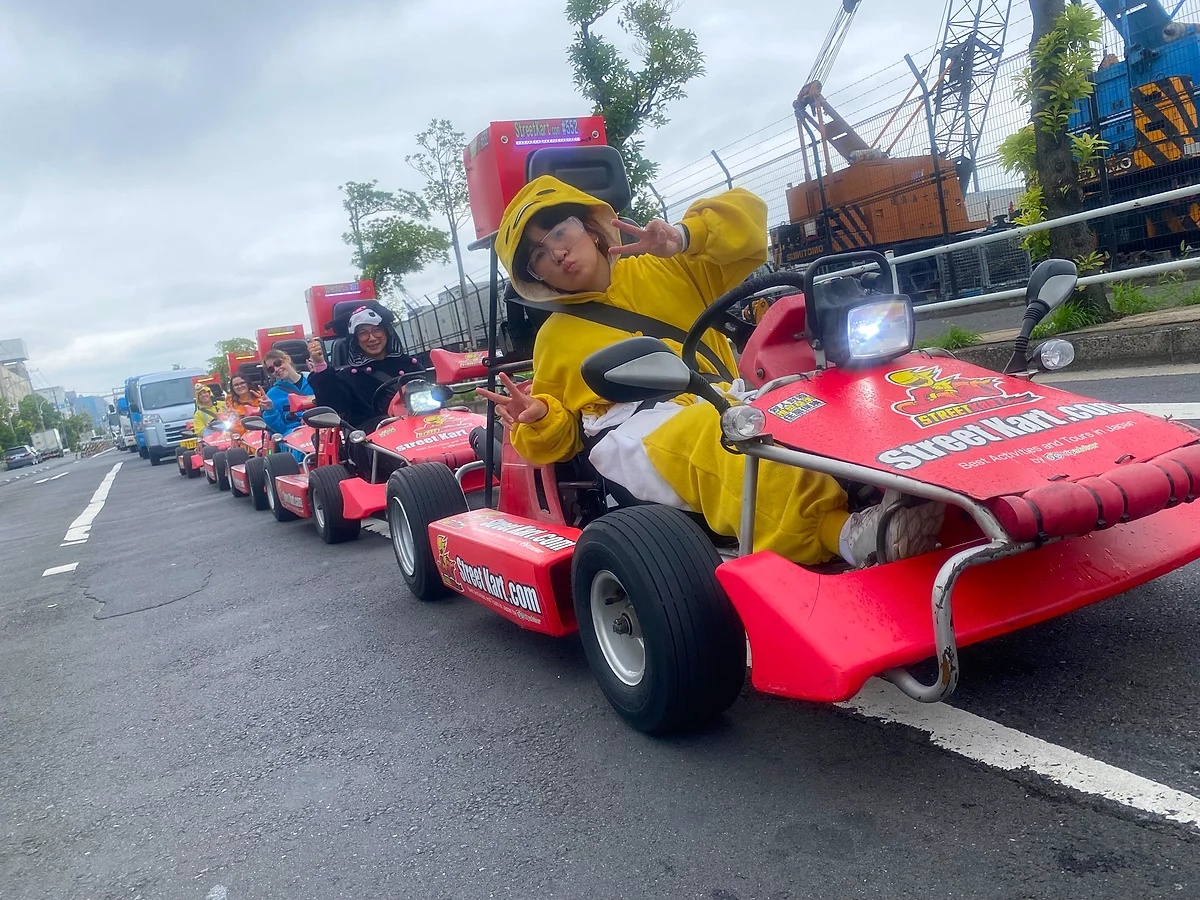
Before You Ride a Street Kart in Autumn-Leaf Tokyo: 7 Pitfalls to Avoid When Traveling with Companions of Different Ages and Fitness Levels
Ginkgo leaves carpet the sidewalks in yellow, and evening light slants across the glass of the office towers. Autumn in Tokyo is the season when the city's colors change slowly but surely.
If you're traveling with friends of different generations and fitness levels, though, this season has its own "Oh no!" moments waiting for you. Underestimating the cold. Cramming too much into one day. Booking as if everyone can ride. A little preparation prevents every one of these.
This article covers 7 common pitfalls when you add a street kart experience to a trip to Tokyo during autumn-leaf season, with tips on avoiding each one. The goal is for everyone in your group to enjoy autumn in Tokyo to the fullest without anyone pushing themselves too hard.
First, some background on the autumn-leaf season.
In Taiwan, autumn leaves usually mean a trip up into the mountains. In Tokyo, though, the tree-lined avenues and gardens right in the middle of the city change color. Trees turn bright yellow at the foot of skyscrapers, and the first time you see it, it feels a little surreal. Tokyo's leaves also turn much later than those in Japan's mountain areas.
Keep in mind that the timing isn't the same every year. The peak viewing period shifts depending on how quickly temperatures drop. If you plan your itinerary around last year's photos ("It was bright yellow around this time!"), you may arrive to find the leaves still green or already gone.
Also, don't take the "autumn" on the calendar too literally. Some years, midsummer heat lingers well into September, and the weather doesn't follow the dates. If you're going for the autumn leaves, check the Tokyo foliage forecast on a Japanese weather website before you leave, and build some flexibility into your schedule.
Pitfall 1: Assuming "Everyone Can Ride" When You Book
This is the most common mistake in groups with mixed ages and fitness levels.
Street karts are single-seaters. Nobody can sit on someone's lap, and two people can't share a kart. In other words, everyone who rides is a driver with their own hands on the wheel.
And to drive, you must meet the participation requirements. We won't state the license types or age requirements here. The documents you need depend on your country and license type, so the safest thing is to read the official guidance before booking. For details, see the official website.
The fix is simple! Before booking, check whether each person in your group meets the requirements. Then decide up front who will ride and who won't. If you leave this vague until the day of the tour, things can get pretty awkward at the reception desk.
It's perfectly fine if some people don't ride. In fact, those groups often end up planning the day more carefully. More on that in Pitfall 5.
Pitfall 2: Underestimating the Chill of the Autumn Wind
This pitfall is specific to the season.
The karts have no roof, and the seats sit very low to the ground. You feel everything directly: the wind blowing between buildings, the engine of a passing bus, the buzz of the city spilling across intersections. That sensation is the whole appeal of street karting, but in autumn the wind is properly cold.
During the day it can be warm enough to break a sweat while walking, but by evening the air suddenly changes. That's late autumn in Tokyo. With the wind hitting you steadily at ground level, you'll feel much colder than you would on foot. If anyone in your group has trouble regulating their body temperature, please take this seriously.
The fix: plan on layering. Dress so you can add a thin down jacket or fleece, and bring something to cover your neck, plus gloves. Once your fingers go numb on the wheel, it's harder to focus on driving.
That said, it's probably best to avoid long, dangling fabric like a flowing scarf. For rules on clothing and belongings on the day, follow the instructions you receive when you book. If you're unsure what you can wear, ask in advance.
And for those who want to have some fun with their look: our original costumes are available on a first-come, first-served basis. Just remember that only costumes provided by the shop can be used.
Pitfall 3: Trying to Include Autumn-Leaf Spots in the Tour Route
Scrolling through autumn-leaf photos on social media, it's easy to think, "Wouldn't it be amazing to drive a kart down a tree-lined avenue of autumn leaves!?"
But street kart tours are led by a guide, who also controls the route. It's not a vehicle you drive wherever you like. We also can't promise that there will be colorful trees along the tour route.
The fix is to plan the autumn leaves and the kart ride as separate parts of your day. Walk to see the leaves before or after the tour. Once you think of it that way, your schedule becomes much simpler.
Tokyo has plenty of places in the city to enjoy autumn leaves. The Ginkgo Avenue at Meiji Jingu Gaien, for example, is famous for its long, straight path that turns entirely yellow. In Bunkyo Ward, Rikugien and Koishikawa Korakuen are Japanese gardens where ponds, bridges, and colorful trees come together. At Hama-rikyu Gardens, the waterside garden and high-rise buildings fit into a single frame.
However, the distance and travel time from these spots to the tour's starting point vary widely. Once you've picked where to go, check the actual route in a transit app before finalizing your plans. It's also a good idea to check each garden's official information for opening days and admission.
Pitfall 4: Cramming Too Much into One Day
During autumn-leaf season, popular gardens and tree-lined avenues in Tokyo can get crowded. At spots full of people taking photos, you may not be able to move along as quickly as you'd like.
So what happens if you pack your schedule tight? You run late at the garden, then rush to the tour meeting point. You hurry up the station stairs and sit down in the kart still out of breath. Nobody enjoys that, especially in a group with different fitness levels.
The fix is to schedule some "do-nothing time" before and after the tour. Beforehand, head to the area early and give yourself enough time to enjoy a hot drink at a café. Afterward, don't jump straight into the next plan. Take some time to sit down somewhere and catch your breath.
Honestly, just stepping into a café is a treat in autumn in Tokyo! Seasonal menus appear, and sweets made with chestnut, sweet potato, and hojicha (roasted green tea) show up in shop windows. In Taiwan, fruit tea often stays the star even in autumn, but in Japan, autumn quickly becomes all about chestnuts and sweet potatoes. That switch is something you should definitely experience.
How you get there matters too. The shops don't have parking, so taking the train or other public transportation is the standard way to go.
Pitfall 5: Not Planning What Non-Riders Will Do
In Pitfall 1, we said to decide who rides and who doesn't. The next important step is figuring out how the non-riders will spend that time.
A common mistake is to just say, "See us off, then wait around nearby." If it's not clear where to come back to or when to meet, the people waiting spend the whole time on edge. If a phone battery dies or someone gets lost in the Tokyo subway, you might not be able to find each other.
The fix is to choose a specific meeting place. Save a café or somewhere to sit and wait near the meeting point in your map app ahead of time. We won't state how long the tour takes here. Check the booking information, and plan your meetup around that time.
We recommend turning that time into a "bonus activity" for the non-riders. They could stroll through an autumn garden ahead of everyone and swap photos later, or pick out autumn sweets in a department store food hall. Having something to do turns waiting time into something more.
One tricky thing about the Tokyo subway is that the kanji in station names look similar to Taiwan's traditional Chinese characters but are subtly different. For example, the character for "station" is 駅 in Japanese, while in Taiwan it's 站. Save the station name and exit number of your meeting place on the non-riders' phones too, written in Japanese. If they get lost, they can simply show the screen to station staff.
Pitfall 6: Trying to Take Photos While Driving
We completely understand wanting photos for social media during autumn-leaf season. But never touch your phone while driving.
While you're driving the kart, you need to keep your attention on the guide ahead of you and on the surrounding cars and pedestrians. Autumn is also a season when road conditions change easily, with fallen leaves piling up or the pavement getting wet from rain. Follow the guide's instructions while driving and focus only on driving. That's the golden rule.
For how to take photos and the rules on photography, follow the instructions given on the day. We won't say here where on the tour you can take photos.
So where should you take those stunning autumn-leaf shots? The answer: off the kart. At the gardens and tree-lined avenues you walk to before or after the tour, you can stop, think about your composition, and take as many shots as you like.
On a ginkgo avenue, instead of standing in the middle of the path, try moving slightly to the side and shooting from an angle that brings out the depth. It'll look like a yellow tunnel. Lowering your phone's exposure a little keeps the leaves a deep yellow instead of washing out. At a garden pond, put the leaves reflected in the water in the lower half of the frame for a dreamy, symmetrical shot.
If you're posting on Xiaohongshu (RED), you could use tags like "#东京红叶" and "#東京紅葉," and on Instagram, something like "#tokyoautumn." Adding tags in both Japanese and Chinese is another option.
Pitfall 7: Not Accounting for Early Sunsets and Changeable Weather
As autumn deepens, the sun sets earlier and earlier in Tokyo. If you plan with a summer mindset, you might find yourself saying, "I thought it would still be light out, but it's already pitch dark!"
Sunset times vary by season and day, so we won't give specific times here. Check the sunset time in a weather app before you head out to keep your plans on track.
Once the sun goes down, the temperature drops even further. This is where the layering from Pitfall 2 pays off. If you'll see the leaves in daylight and then join a tour after dark, bring an extra jacket so you aren't still in your daytime clothes when night falls.
Don't let your guard down about the weather, either. In autumn, Tokyo can be sunny in the morning and rainy by afternoon. We can't say here what happens to the tour on rainy days or how it's handled. Read the information provided when you book, and ask in advance about anything that's unclear.
Even if rain ruins your autumn-leaf plans, don't be discouraged. Colorful leaves stuck to wet stone paving have a quiet beauty that's different from a sunny day. The ground gets slippery, so choose comfortable walking shoes, and even companions who aren't confident about their fitness can walk safely.
What Makes Street Kart Special
We've spent a lot of time on things that can go wrong, so let's talk about the experience itself.
First, you get to drive through the streets of Tokyo with your own hands on the wheel! You control where you go. Even familiar intersections and main streets look like completely new places when you see them from just above the pavement.
Next, trained guides lead the way. On every tour, a guide drives in front, controls the route, and keeps an eye on safety. Participants follow the guide.
And you can feel Tokyo's changing seasons firsthand. The cold autumn wind, the slanting evening light, the shifting colors of the street trees. In a vehicle with no roof, you take in the whole feel of the day, and it stays with you.
Finally, here's a summary of what to check before booking.
Most important: make sure everyone planning to ride meets the participation requirements. Check the license requirements on the official website mentioned earlier. Prepare the required documents exactly as the official guidance says. If you find out on the day that you only have some of them, you may not be able to ride.
Next, the date and time. Weekends fill up quickly, so we recommend booking early once you've decided when you want to go. Prices vary by season and time slot, so check the official website (kart.st) for the latest information.
There are 9 shops across Japan, 7 of them in Tokyo (plus one each in Minami-Horie, Osaka, and Naha, Okinawa). However, Akihabara Shop 1 and Shop 2 are in almost the same location, as are the Shibuya shop and Shibuya Annex. Check the official website for which routes run from which shops. Tour guidance on the day is generally in English. Guidance in Japanese or other languages depends on the staff that day and can't be guaranteed. If you have a request, get in touch before you book.
You can book via Facebook, LINE, or email. Contact details are on the official website. If you have questions about the tour or how the day will go, ask when you book so you can relax on the day.
Autumn in Tokyo, at Everyone's Own Pace
During autumn-leaf season in Tokyo, everything from the avenues and gardens to the small trees on street corners changes color.
When you're traveling with friends of different ages and fitness levels, there's no need for everyone to rush around at one person's pace. Riders take the wheel and feel the autumn wind head-on. Non-riders stroll through a garden and take photos of the yellow leaves. Then, when you meet up, you show each other what you've been up to. Everyone can enjoy the trip in their own way, side by side.
There are 7 points to remember: check the participation requirements, prepare layers, plan the autumn leaves and the tour as separate parts of your day, leave room in your schedule, decide on a meeting place, don't take photos while driving, and check the sunset time and weather. Keep these 7 in mind, and enjoy autumn in Tokyo with everyone in your group.
Now, start by looking up the foliage forecast for the day you want to go and checking the participation requirements on the official website. See you all in autumn-colored Tokyo!
This article was originally written in Japanese and translated using AI. Some expressions may read unnaturally, and we appreciate your understanding. For the most accurate and up-to-date information, please refer to the official site at kart.st.
Street Kart is not affiliated with Nintendo or the Mario Kart series in any way. We do not provide costumes of Nintendo characters, and such costumes may not be worn during tours even if brought by participants.