
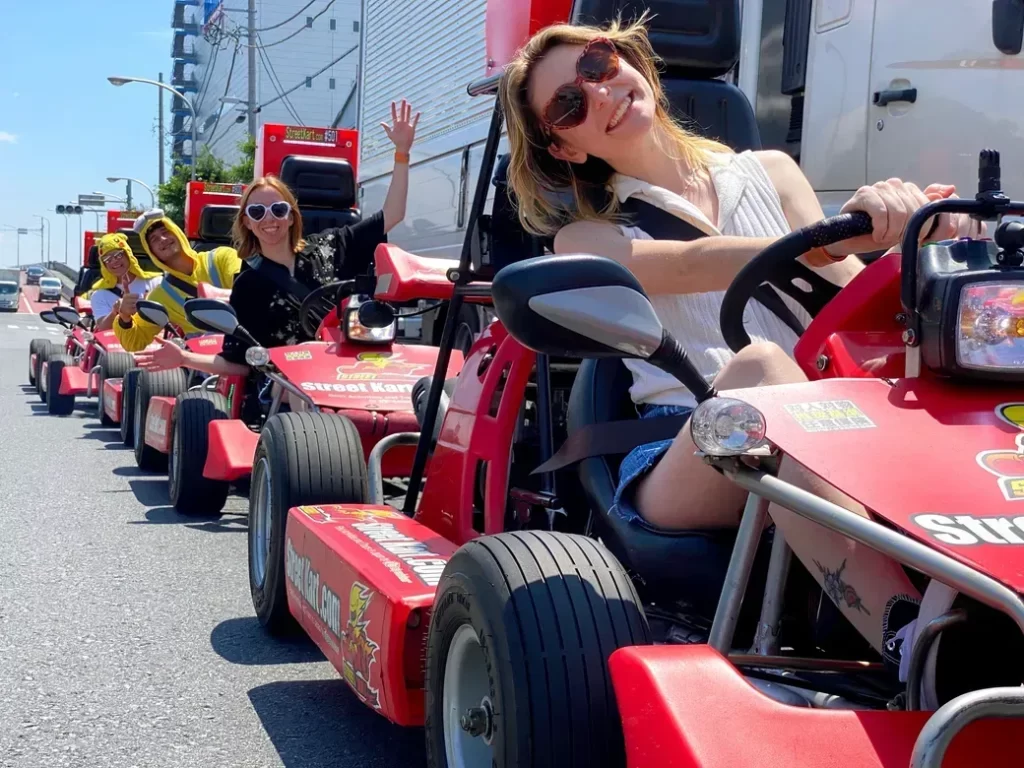
Experience Tokyo’s Winter Night Views: The Faces of the City Through an Official Street Kart Tour
Tokyo in winter is a season when the city’s atmosphere transforms dramatically between day and night. Many travelers spend their daytime hours sightseeing and shopping, then want to slowly take in the light-bathed streets after dark. For those who want to see Tokyo through that particular time of day, a street kart experience becomes a worthy option to consider. Because the tour format takes you along public roads, you can experience Tokyo’s nights up close to the streets themselves, rather than viewing them from inside a vehicle.
The official site at kart.st introduces tours departing from multiple areas of Tokyo. For example, the Shibuya area course features an approximately one-hour route covering Dogenzaka, the Shibuya Scramble Crossing, Omotesando, and the Harajuku area. The Tokyo Bay course offers a roughly 1.5 to 2-hour route that includes the Rainbow Bridge and the Tokyo Tower direction. The Asakusa area features a course of about 45 minutes to one hour, traveling from near Kaminarimon toward the Tokyo Skytree. With this kind of route information openly available, it’s easy to consider options that match your travel schedule and the kind of cityscape you’d like to see.
When planning a night tour in Tokyo’s winter, temperature isn’t the only factor worth focusing on. After sunset, the city shows different faces in commercial districts, business districts, historic streetscapes, and along the bay. Official street kart tours can be understood as a way to take in those urban contours continuously while moving through them. The fact that scenes that often feel disconnected when walking get linked together as one route is an easy-to-grasp appeal for travelers wanting to enjoy night views.
Why Consider a Street Kart Experience in Tokyo’s Winter
During winter sightseeing, the volume of daytime activity tends to be high, which can leave evenings limited to just dinner and observation decks. On the other hand, Tokyo’s main areas keep flowing with people and lights well into the night, creating an environment where simply moving around becomes a sightseeing experience in itself. Official street kart tours suit travelers who want to savor those urban landscape transitions on a route-by-route basis.
The Shibuya course suits those who want to see the flow of people and the continuity of commercial districts that feel quintessentially Tokyo. The official site introduces a route progressing from central Shibuya through Dogenzaka, the Shibuya Scramble Crossing, Omotesando, and on to Harajuku. The area is famous for its daytime liveliness, but at night, building lighting, signage, and the atmosphere of each street stand out, creating a different impression than during the day. In winter, you’ll be riding while feeling the outside air through warm clothing, making it a time of day where the city’s very temperature can become part of your travel memories.
The Tokyo Bay course is well-suited for those seeking expansive scenery. According to official information, the route passes through industrial areas, then crosses the Rainbow Bridge, taking in views of Tokyo Bay and the city skyline as it heads toward Tokyo Tower. The bay area differs from the dense feel of central Tokyo, with scenery characterized by a combination of bridges, sea, roads, and tower. Winter nights can feel windy, so warm preparation is necessary, but in exchange, this is a route that makes the breadth of the city particularly easy to feel.
The Asakusa course is suited for those who want to see Tokyo’s old and new at once. The official site introduces a structure that departs from the Asakusa shop, passes near Kaminarimon, and heads toward Tokyo Skytree. Because the atmosphere of a historic district and a modern landmark connect along the same route, it’s an easy-to-understand combination even for travelers visiting Tokyo for the first time. At night, the outlines of buildings and the lights along the streets stand out more than during the day, making it easier to grasp the city’s character even in a short time.
Tour Format and Basic Pre-Participation Information You Can Check on the Official Site
Street kart is a guided tour where participants travel on public roads. On the official site, each shop page organizes course summaries, durations, locations, and reservation flow. While it’s a tourism-oriented service, because it uses public roads, the items you should check before participating are clearer than for typical sightseeing activities. Especially on winter nights, since clothing, belongings, and meeting time management can affect the entire experience, pre-reservation confirmation is important.
The first thing to check is the licensing documentation required for participation. The official license guidance page is available at https://kart.st/en/drivers-license/. It outlines the main categories of documents required to drive on Japanese public roads. These include a Japanese driver’s license; an International Driving Permit based on the 1949 Geneva Convention along with your home country’s license and passport; or a driver’s license from certain eligible countries or regions accompanied by an official Japanese translation and passport. Because the eligible countries, regions, and document combinations are defined in detail, you must always check the latest conditions on the official page rather than relying on your own judgment.
The official page also explains that digital licenses are not valid in Japan, that International Driving Permits must be in paper booklet form, and that they must be based on the 1949 Convention. It also clearly states that if you cannot bring the original required documents, you cannot participate, and refunds will not be issued. While it’s tempting during travel to feel reassured by storing information on your smartphone, since the conditions include requirements for paper originals, this is something you must absolutely organize during your pre-departure preparation.
In addition, the official site recommends having photos of your license documents pre-checked via chat or email after booking. This is practical for reducing on-site verification mismatches. Particularly for winter travel, schedules may include year-end, New Year, or long holidays, leaving little flexibility for itinerary changes. Settling participation conditions early contributes to overall stability in your tourism plans.
Official Tokyo Courses That Pair Well with Winter Night Views
When emphasizing night scenery in Tokyo’s winter, the course you choose changes the character of your experience. Looking at the route information published on street kart’s official site, the way night views appear can be broadly divided into three categories. There’s the route that conveys the city’s central density, the route that conveys the bay’s expansiveness, and the route that conveys the contrast between history and modernity.
The Shibuya course is suited for those wanting to feel Tokyo’s urban density up close. The stretch from Dogenzaka to the Shibuya Scramble Crossing is an area where you can experience the atmosphere around one of Tokyo’s most representative intersections. Furthermore, the flow continuing toward Omotesando and Harajuku makes it easy to compare the differing impressions of each street within a single run. On winter nights, shop lighting and building exteriors catch the eye easily, creating a course where even in a short time you can feel like you’ve truly seen “central Tokyo.”
The Tokyo Bay course is suited for those seeking a sense of urban scale. The official information shows a structure where you cross the Rainbow Bridge, viewing Tokyo Bay and the skyline as you head toward Tokyo Tower. Because it includes the moment of crossing the bridge and scenery around the tower, it’s a route that lets you feel not only the road landscapes of central Tokyo but also the wide visual openness unique to the bay. Winter nights make body-felt temperature drop more easily, so equipment is necessary, but in exchange, this is a course where the urban landscape, including its atmosphere, tends to remain memorable.
The Asakusa course offers content easy to consider even for those with limited travel schedules. With a duration of about 45 minutes to one hour, the official site introduces a route connecting the Kaminarimon area with Tokyo Skytree. Because a historic tourist site and a modern landmark connect at close range, even those visiting Tokyo for the first time can easily understand the changes in scenery. Winter nights are also a time when tourist destinations take on a calmer impression, making this course suitable for those wanting to capture the Asakusa area from a different perspective than during the day.
Clothing and Reservation Considerations to Check When Preparing for Winter Participation
For a winter street kart experience, preparing your clothing is important. Because you’ll be traveling on public roads, you’ll feel the outside air. Rather than assuming your standard sightseeing attire will work, it’s more practical to think in terms of nighttime travel time. Preparing combinations that make body temperature easy to regulate—thick outerwear, wind-resistant clothing, accessories that cover your neck and hands—helps reduce the burden during the ride. Since temperatures vary by day, the realistic approach is to check the weather forecast before your trip and choose clothing that’s easy to layer.
When reserving, you need to confirm not only the scenery you want to see but also the consistency between the meeting location and duration. For example, whether you choose a shorter course that fits easily before or after dinner, or build your day around a longer course that includes the bay area, completely changes how you structure your itinerary. The official site organizes each shop’s location, business hours, and course summaries, so reviewing them while including travel time from your accommodation area helps avoid strain.
The official site also provides guidance on changes and cancellations to reservations. Because conditions may change immediately before your reservation or participation date, you should always check at the time of booking. Since winter travel can be affected by weather and transportation conditions, having a grasp of post-booking change rules helps with decision-making.
How to View Incorporating a Street Kart Experience into Your Tokyo Winter Trip
A street kart experience differs from trips that visit one tourist attraction at a time—it’s a type of activity where you experience the continuity of the city. For that reason, when incorporating it into your Tokyo winter travels, choosing based on “which urban flow you want to feel” rather than just “where you want to see” creates a better fit.
If you’re planning shopping or cafe-hopping mainly around Shibuya, the Shibuya course becomes a candidate that lets you see another angle of the same area’s nighttime face. If you want to see dynamic urban breadth that includes the bay’s scenery and Tokyo Tower, the Tokyo Bay course becomes a candidate. If your sightseeing centers on the Asakusa or Tokyo Skytree areas, the Asakusa course becomes a good match. Choosing this way makes it easier to find meaning not just as a one-off experience, but within the overall flow of your itinerary.
Winter is a season where how you use time after sunset has a strong impact on travel satisfaction. If you want to leave behind not only indoor sightseeing or dining but also the very appearance of the city itself as one experience, official street kart tours are worth considering. However, since this is an experience involving travel on public roads, confirmation of participation conditions shouldn’t be approached with just a sightseeing mindset. The premise is that you incorporate it into your plan after confirming licensing documents, clothing, meeting times, course content, and reservation conditions.
Summary
Tokyo’s winter nights show different scenery in each area. Official street kart tours offer guided routes through representative Tokyo areas like Shibuya, Tokyo Bay, and Asakusa, providing a structure that makes it easy to experience the night city’s expressions together with the act of moving itself. For those wanting to view the city as a line rather than visiting tourist sites as points, this becomes one of the options.
Reservations and detailed confirmation can be done at the official site kart.st. Particularly important among participation conditions are the licensing documents, with information organized on the Driver’s License Information Page. When planning to enjoy winter night views in Tokyo, the appropriate approach is to first check the official information, compare courses against your itinerary and conditions, and then make your decision.
Notice Regarding Costumes
Our shop does not rent costumes related to Nintendo or “Mario Kart.” We provide only costumes that respect intellectual property rights.

